

Scicom
Replaced an external ticketing tool with a native, tamper-resistant release approval process inside Azure DevOps.
One auditable approval path, replacing scattered tickets and email threads.
Project Overview
Releases were being approved through a mix of external ticketing, email threads, and side conversations, with no enforced separation of duties and no tamper-resistant record of who approved what. KPThink designed a governance model native to Azure DevOps: a custom Audit Task work item captures scope, risk, and technical context; a Classic Release Pipeline enforces a manual approval gate; and four distinct personas (Solution Architect/Developer, Quality Engineer, Product Owner, and Operations) each have clearly scoped responsibilities and restrictions, with Operations holding sole authority to approve a release. The result is end-to-end traceability from business work item to release approval, with locked records nobody can quietly edit after the fact.
Client name and identifying details changed at the client's request to protect confidentiality. Technical scope and methodology described are accurate.
Client Requirements
- 1A single system of record for release approvals instead of external tickets and email threads.
- 2Clear separation of duties so no one person can both request and approve a release.
- 3A tamper-resistant approval record suitable for audit review.
- 4A process usable enough that engineers aren't routed through ten different tools to ship.
Architecture
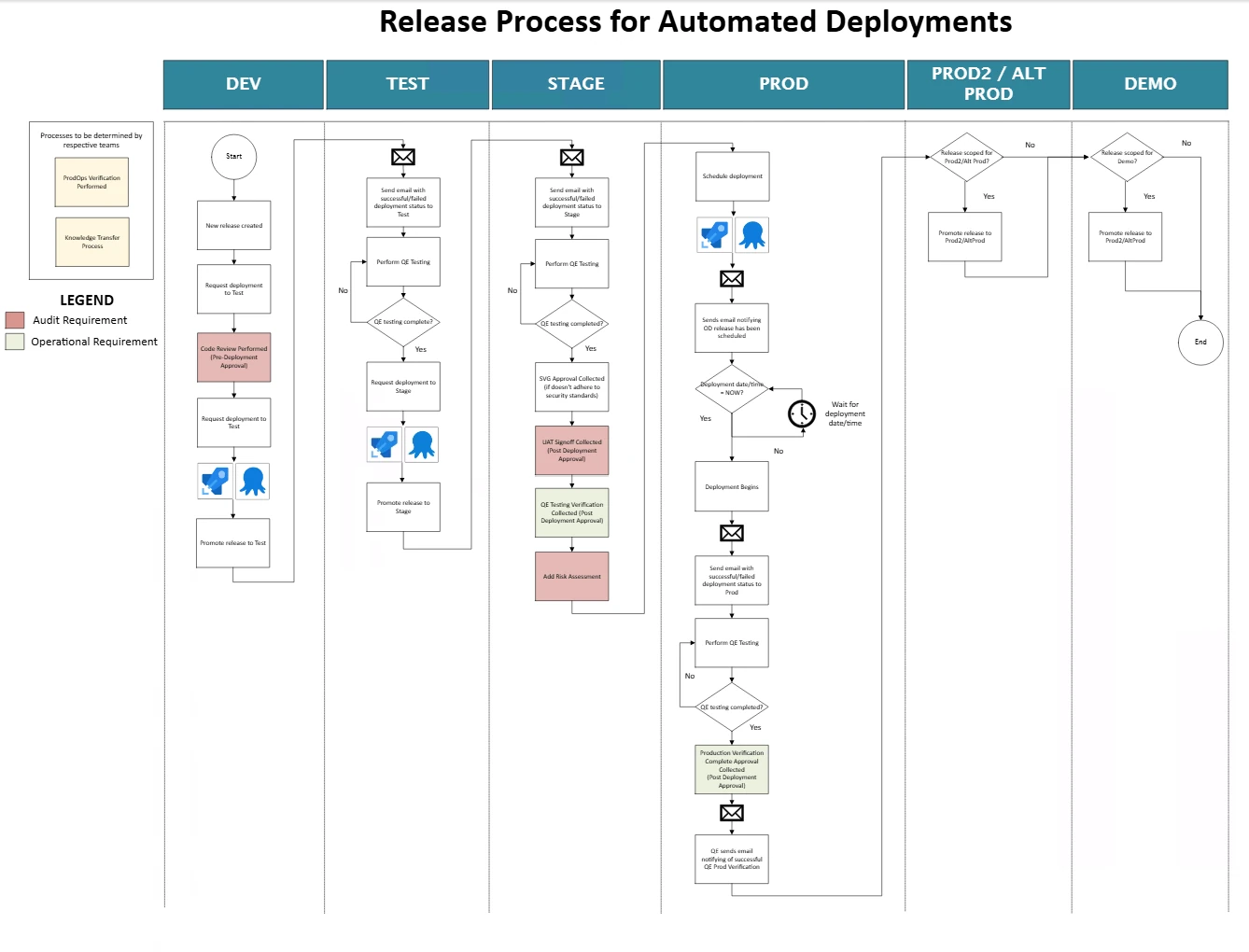
Approval Chain
Illustrative recreation of the persona chain described above, not a screenshot from the engagement. Built natively on Azure DevOps groups and permissions, per Microsoft's own Azure DevOps governance guidance.
Services We Provided
The scope of work KPThink delivered for Scicom.
Azure DevOps Governance Design
Release Pipeline Architecture
RBAC / Persona Access Model
Audit & Compliance Documentation
Key Features & Functionality
The main components of the solution and what each one does.
Custom Audit Task Work Item
A structured, native ADO work item that captures release scope, risk assessment, and technical context in one place, replacing ad-hoc tickets in an external system.
Persona-Based Approval Chain
Solution Architect/Developer, Quality Engineer, and Product Owner each contribute their piece; only the Operations role can perform the final approval, enforced by group membership, not honor system.
Locked, Auditable Records
Once approved, records are locked so history can't be quietly edited later, giving auditors a straight line from business work to release decision.
What Changed for the Client
The practical results of the engagement, as documented in the project records.
One Approval Path, Not Several
Consolidated release approvals that previously spanned an external ticketing tool, email, and side conversations into a single native ADO workflow.
Enforced Separation of Duties
Requesters, quality reviewers, business owners, and the approver are now distinct roles enforced by group membership, closing a gap where the same person could effectively both request and approve a release.
Audit-Ready by Default
Every release now has a locked, traceable record from the originating work item through to the operational approval decision, rather than evidence being reconstructed after the fact for an audit.
Challenges & Engineering Solutions
The main problems the engagement had to solve, and how KPThink addressed each one.
The Challenge:
Release approvals ran through an external ticketing tool plus email and side conversations, with no single source of truth and no enforced accountability for who could approve what.
KPThink's Solution:
Replaced the external tool with a native ADO Audit Task work item and Classic Release Pipeline, so the approval record lives in the same system as the code and release itself.
The Challenge:
Anyone with access could technically approve a release, since permissions weren't scoped by role: a real audit and compliance risk.
KPThink's Solution:
Defined four distinct personas with group-based restrictions, so only the Operations/Approvers group can perform the actual release approval; everyone else can contribute context but not approve.
Have a Similar Challenge?
Tell us what you are working on, and we will tell you how we would approach it and whether we are the right fit.